MAGAZINE · CLASSIFYING LEADS CORRECTLY
Interest is not purchase intent.
A lead visits the website, downloads content or responds to a message — and is immediately treated as an opportunity. But interest and purchase intent are two different things.
Whoever recognizes the difference saves time and prioritizes real opportunities correctly.
Anyone who equates interest with purchase intent invests a lot of time in conversations that don’t lead to a close. At the same time, real opportunities are sometimes recognized too late or not prioritized enough.
The key lies in recognizing where a lead really stands in the process.
/ 01 — Interest
01
Interest is the beginning, not the goal
Interest means someone is engaging with a topic. It shows relevance, but doesn’t yet say anything about whether a decision is imminent.
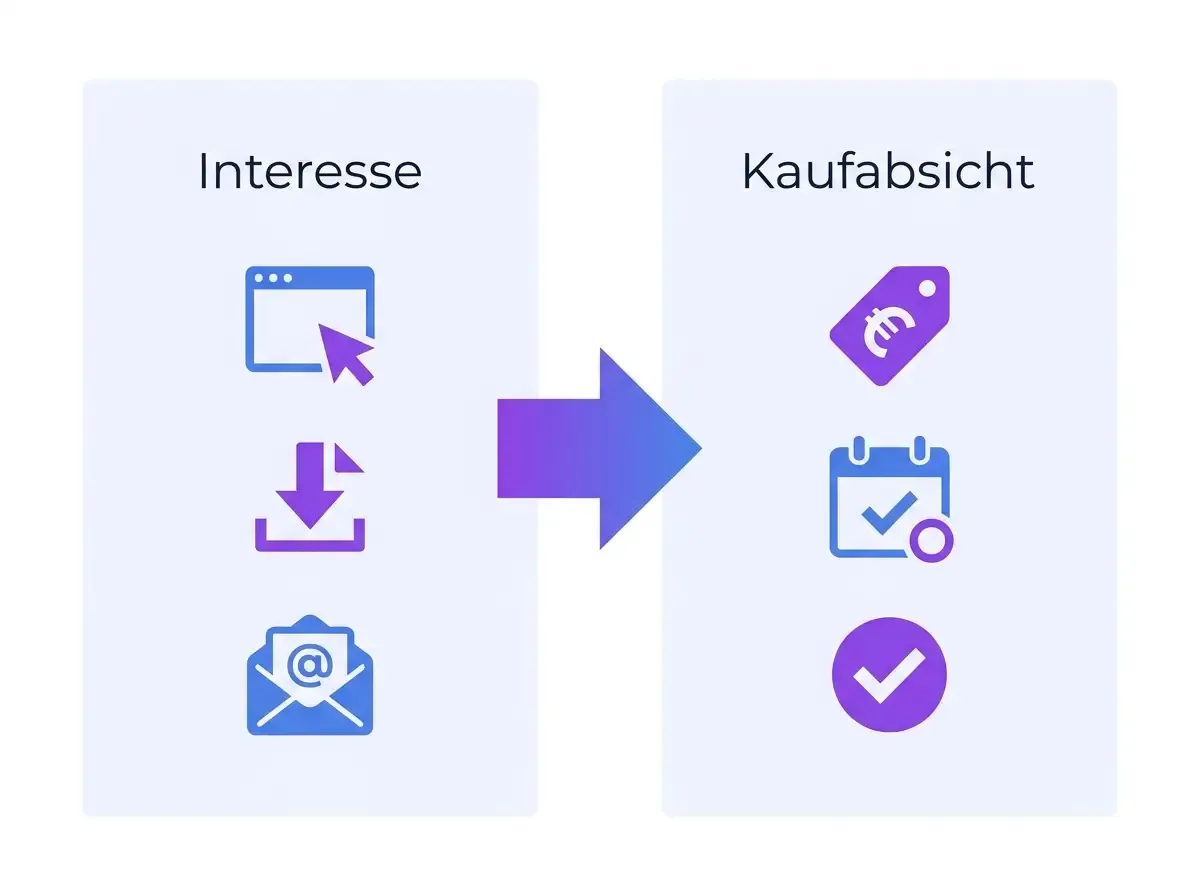
Typical signals: a website visit, downloading a guide, reacting to a LinkedIn post, opening an email. They show attention — not readiness to buy.
Interest shows attention. Not readiness to buy.
/ 02 — Purchase intent
02
Purchase intent looks different
Real purchase intent is more concrete. It shows up through behavior that points toward a decision: specific questions about implementation or price, requests for references, mentioned internal coordination, or the wish for a meeting or a demo.
Here the perspective shifts: from general interest toward a concrete search for a solution.
A structured view helps classify leads. Three questions matter most:
- Is there a concrete problem?
- Is the person actively searching for solutions?
- Is there a time-related relevance?
If these points are met,
the likelihood of real purchase intent rises significantly.
/ 03 — Approach
Two phases. Two approaches.
Five steps to guide prospects and buy-ready leads differently.
1
CONTENT
Interest: provide content
Anyone still at the beginning needs orientation — suitable content that makes the topic tangible.
2
TRUST
Interest: build trust
Continuous presence and substance build trust, long before a close is on the table.
3
PRESENCE
Interest: stay present
Stay visible without pushing. Timing decides when interest turns into more.
4
SOLUTION
Purchase intent: show solutions
With concrete purchase intent, clarity counts: show the right solution and make the benefit tangible.
5
NEXT STEPS
Purchase intent: next steps
Make the decision easier and define clear next steps — a meeting, a proposal, a demo.
/ 04 — In practice
04
From practice: responding, but rarely closing
A company noticed that many leads responded, but rarely led to closed deals. The analysis showed: a large share of contacts were still in the information phase.

By adjusting the process — fewer direct sales attempts, more supporting content — these leads were approached more precisely later on. The close rate rose noticeably.
Keep reading: Why your offer isn’t the problem · GEO guide: AI visibility
/ 05 — FAQ
Frequently Asked Questions
Reflects the real prompts from Google AI & ChatGPT around purchase intent and lead quality in B2B.
Is a website visit already a buying signal?
No. A visit, a download or an email open show attention, not readiness to buy. They sit at the beginning of the journey.
How do I recognize real purchase intent?
Through concrete behavior: questions about implementation or price, requests for references, mentioned internal coordination, or the wish for a meeting or demo.
What do I do with pure prospects?
Guide instead of sell: provide content, build trust, stay present — and approach them deliberately at the right moment.
/ 06 — Who it’s for
Built for companies whose offering needs explaining.

IT & software service providers
With offerings that need explaining and few, high-value customers.

Manufacturing industry & mechanical engineering
Selling complex technology to a small number of major decision-makers.

Startups & scale-ups
Wanting to become visible quickly and credibly.