MAGAZINE · TRENDS & DEVELOPMENTS
The Biggest Fallacy in Digital Sales
Why activity isn’t the same as results.
In digital sales, a lot happens: posting, writing, analyzing, optimizing. From the outside, everything looks active – often even successful. But behind that activity, there isn’t always impact. Many companies mistake motion for progress – and that’s exactly one of the biggest fallacies in digital B2B sales.
/ 01 — Activity
Activity feels like progress
When something happens, it creates the feeling that things are moving. More posts, more clicks, more traffic – it looks like growth. But these numbers often say little about whether new customers are actually being created. Typical examples:
- high LinkedIn reach, but no conversations
- many website visitors, but no inquiries
- good open rates, but no replies
The problem isn’t the activity itself – it’s its missing connection to the result.
/ 02 — Impact
Why impact is harder to recognize
Results in B2B don’t appear immediately. Weeks or months often lie between first contact and a closed deal. That makes it hard to connect cause and effect directly. That’s why many people focus on what’s immediately visible – instead of what matters in the long run. This is exactly where the challenge lies: success in digital sales is often visible only with a delay, but is all the more sustainable for it.
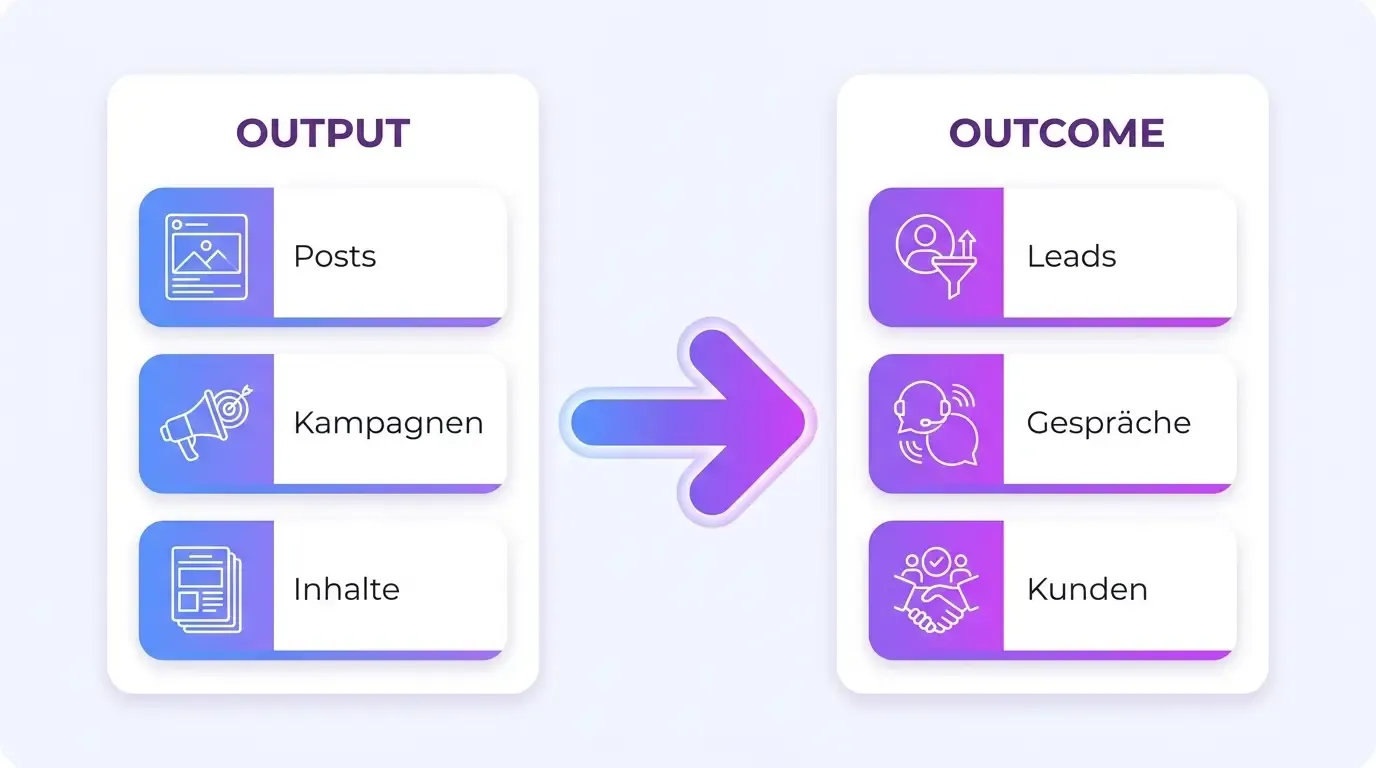
Output is what you do – outcome is what comes of it.
/ 03 — Output & Outcome
The difference between output and outcome
In digital sales, a clear distinction pays off: output is what you do – posts, campaigns, content. Outcome is what results from it – leads, conversations, customers. Many teams optimize output, even though outcome is actually what counts. Processes keep getting more efficient this way – but not necessarily more effective.
/ 04 — What matters
What really matters
Instead of activity, you should focus on a few central questions:
- Do your efforts lead to conversations?
- Are these conversations relevant?
- Do real opportunities develop from them?
If these points aren’t met, something in the system is off – no matter how active you are.
/ 05 — Focus
Why less is often more
A common effect: the more that’s done at the same time, the less focus results.
- too many channels
- too much content
- too many experiments
The result is often unclear – a reduced approach frequently leads to better results.
/ 06 — In practice
A practical example
A company was very active on LinkedIn, publishing several times a week and testing various campaigns. Reach was high – inquiries stayed away. After an adjustment, the focus shifted: less content, but clearer topics, more concrete offers and targeted next steps. The result: less activity – but significantly more conversations.
Activity matters – but it’s not a goal in itself. In digital sales, it’s not about doing as much as possible, but about doing the right thing. If your efforts aren’t leading to conversations and closed deals, it’s worth taking a look at the structure behind them. Because in the end, what counts isn’t how much you do – but what comes of it.
Keep reading: Which KPIs really matter in B2B sales · AI overload in sales · Fewer channels, more impact
/ 07 — FAQ
Frequently Asked Questions
Reflects the real prompts from Google AI & ChatGPT around activity vs. impact in digital B2B sales.
Why doesn’t more activity in sales automatically lead to more results?
Because activity and impact are two different things. Posts, clicks and traffic look like progress, but say little about whether conversations and customers actually result. What matters is the connection between the effort and the result.
What’s the difference between output and outcome in B2B sales?
Output is what you do – posts, campaigns, content. Outcome is what results from it – leads, conversations, customers. Anyone who only optimizes output becomes more efficient, but not necessarily more effective.
How do I know if my digital sales are really working?
By asking a few central questions: Do your efforts lead to conversations, are they relevant, and do real opportunities develop from them? If not, something is off in the structure – regardless of how active you are.
/ 08 — Who it’s for
Built for companies whose offering needs explaining.

IT & software service providers
With offerings that need explaining and few, high-value customers.

Manufacturing industry & mechanical engineering
Selling complex technology to a small number of major decision-makers.

Startups & scale-ups
Wanting to become visible quickly and credibly.