MAGAZINE · TOOLS & TECHNOLOGY
Which KPIs Really Matter in Digital B2B Sales
And which don’t — how to evaluate your performance meaningfully.
A lot gets measured in digital sales — often too much. Clicks, impressions, likes, open rates, page views: the list of possible metrics is long. The problem: many of these numbers look good but don’t bring you any closer to your actual goal — new customers. We show which KPIs really matter in digital B2B sales.
/ 01 — Too Many KPIs
Why too many KPIs do more harm than good
Many companies try to track as much as possible. That quickly leads to two problems:
- Decisions become unclear
- Focus gets lost
Especially in B2B, where decision-making processes are more complex, you need clear metrics that have a direct impact on revenue and pipeline.
When every number matters, none of them really does.
/ 02 — The Three KPIs
The three most important KPIs at a glance
Instead of 20 numbers, you should focus on a few central metrics:
- Lead quality over lead quantity: What matters is how many of your leads truly have potential and fit your target audience.
- Conversion rate along the process: How many leads become conversations, conversations become proposals, proposals become deals?
- Sales cycle: How long does it take from first contact to deal? A sales cycle that’s too long often points to a lack of structure.
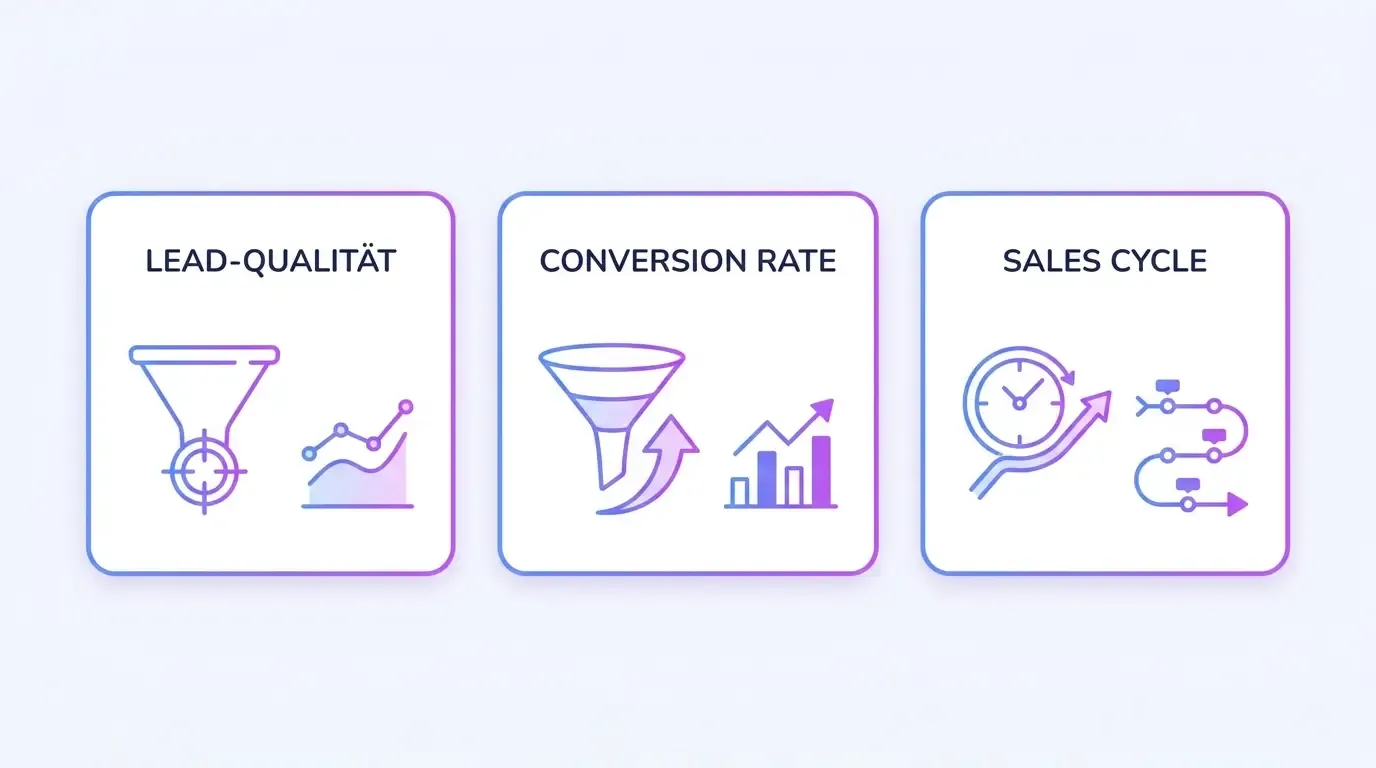
Three KPIs that matter: lead quality, conversion rate, and sales cycle.
/ 03 — Overrated
KPIs that are often overrated
Many metrics look good — but aren’t very meaningful:
- Likes on LinkedIn
- Website traffic without context
- Email open rates without conversion
- Impressions in ads
These numbers can offer clues — but they say nothing about whether you’re actually winning customers.
/ 04 — In Context
How to use KPIs the right way
KPIs shouldn’t be viewed in isolation, but in context. One example: more traffic sounds good — but if conversion rate drops at the same time, that traffic doesn’t get you anywhere. And conversely: fewer leads aren’t automatically bad. If the close rate rises, that can even be a positive sign.
/ 05 — Tools
Tools for meaningful analysis
To keep the right KPIs in view, you don’t need complex systems. Typical setups:
- A CRM like HubSpot or Pipedrive for lead tracking
- Google Analytics or similar tools for website data
- SE Ranking for organic visibility
- Simple dashboards like Looker Studio
What matters isn’t the tool — it’s whether you’re looking at the right numbers.
In digital B2B sales, it’s not about having as many numbers as possible — it’s about having the right ones. If you focus on lead quality, conversion rates, and sales cycle, you get a clear picture of what’s actually working. Everything else is just noise.
Keep reading: How a Modern B2B Funnel Really Works · The Biggest Fallacy in Digital Sales · Interest vs. Real Purchase Intent in B2B
/ 06 — FAQ
Frequently Asked Questions
Mirrors the real prompts from Google AI & ChatGPT around KPIs in digital B2B sales.
Which KPIs are really important in digital B2B sales?
Three matter most: lead quality (how many leads have real potential), the conversion rate along the process (from lead to conversation to proposal to close), and the sales cycle (the time it takes to close a deal). They have a direct impact on revenue and pipeline.
Which metrics are overrated in B2B sales?
Likes on LinkedIn, website traffic without context, email open rates without conversion, and impressions in ads. They can offer clues, but they say nothing about whether you’re actually winning customers.
Which tools do I need to evaluate KPIs?
No complex systems: a CRM like HubSpot or Pipedrive for lead tracking, Google Analytics for website data, SE Ranking for organic visibility, and a simple dashboard like Looker Studio. More important than the tool is that you’re looking at the right numbers.
/ 07 — Who It’s For
Built for companies whose offering needs explaining.

IT & software service providers
With explanation-heavy services and few, high-value customers.

Manufacturing industry & mechanical engineering
Selling complex technology to a small number of major decision-makers.

Startups & scale-ups
Companies that want to become visible quickly and credibly.